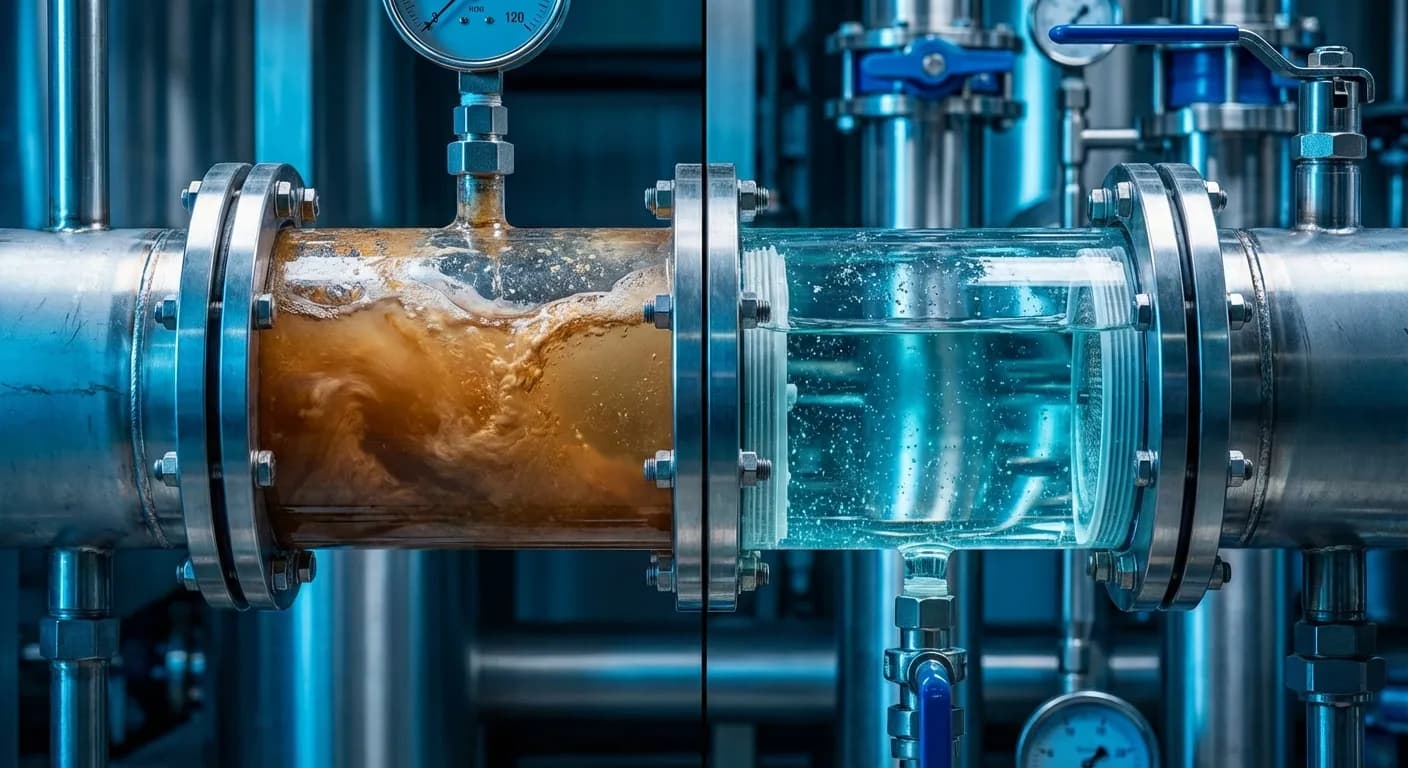
There is no universally "best" coagulant. Ferric chloride (FeCl₃) leads on phosphorus removal, high-colour water and cold-water performance; polyaluminium chloride (PAC) consumes far less alkalinity and produces less sludge; aluminium sulfate (alum) remains the lowest-cost option where water is easy and alkalinity is plentiful. The defensible way to choose is a jar test on your actual source water — everything below tells you what to expect before you run it.
What the three coagulants actually are
Ferric chloride is an iron(III) salt, typically supplied as a 40% solution (CAS 7705-08-0). On dosing it hydrolyses instantly to ferric hydroxide flocs, releasing acidity in the process. Alum (aluminium sulfate) is the classical aluminium coagulant, supplied as solution or kibbled solid. PAC is a pre-hydrolysed aluminium chloride: part of the hydrolysis acidity has already been neutralised during manufacture, which is why it disturbs the water's pH and alkalinity far less than alum or ferric.
The comparison that matters
| Decision factor | Ferric chloride (FeCl₃) | PAC | Alum |
|---|---|---|---|
| Phosphorus removal | Excellent — forms FePO₄ | Moderate | Moderate |
| High-colour / high-NOM water | Excellent | Good | Fair |
| Cold-water performance | Good | Reduced below ~5 °C | Reduced |
| Effective pH window | Wide (~4–11) | Wide (~6–9), forgiving | Narrow (~5.5–7.5) |
| Alkalinity consumption | High — depresses pH | Low (pre-hydrolysed) | High |
| Sludge volume | Higher, dense, settles fast | Lower | Higher, lighter floc |
| Residual metal concern | Iron (taste/stain limits) | Aluminium | Aluminium |
| Handling | Corrosive — HDPE/FRP/lined | Less aggressive | Least aggressive |
| Typical relative price | Low–mid per kg active | Highest per kg | Lowest per kg |
When ferric chloride wins
Choose FeCl₃ first when the duty is phosphorus removal (municipal tertiary treatment, lake-protection discharge limits), when raw water carries heavy natural organic matter or colour, in cold climates or winter operation, and in sludge conditioning and H₂S control duties where iron chemistry does double work. Iron flocs are denser than aluminium flocs, so clarifiers and DAF units load better. The price per kilogram of active metal is usually the lowest of the three in MENA and Mediterranean markets, because ferric is manufactured regionally — including by CHIMI ART in Egypt — rather than imported.
Watch two things: ferric consumes alkalinity (about 0.9 mg/L as CaCO₃ per mg/L of FeCl₃ dosed), so soft, low-alkalinity waters may need lime or caustic alongside; and it is corrosive, so storage and dosing lines must be polyethylene, FRP or rubber-lined steel.
When PAC wins
PAC earns its premium when alkalinity is scarce, when the plant cannot tolerate a pH drop, when sludge disposal is expensive (PAC typically cuts sludge mass 15–30% versus alum at equal turbidity removal), and in direct-feed package plants where its forgiving pH window simplifies control. For drinking water, verify the specific PAC grade's certification status with the supplier — certification is product-specific, not generic to the chemistry.
When alum is still the right answer
Easy surface water, plenty of alkalinity, warm climate, cost-driven procurement: alum remains a perfectly sound choice and the benchmark every alternative must beat in the jar test. Its weaknesses — narrow pH window, temperature sensitivity, lighter floc — only matter when your water actually stresses them.
How to run the decision (the jar test)
- Collect raw water at the worst seasonal condition you must treat (flood turbidity, winter cold, algae season).
- Dose each candidate across a range — for FeCl₃ typically 20–200 mg/L of commercial product — at the plant's real rapid-mix and settling times.
- Score settled turbidity, residual metal, pH depression, floc formation speed and sludge volume.
- Cost the winning dose per cubic metre treated, including alkali correction and sludge handling — not just chemical price per ton.
That last line is where ferric most often wins on paper-loser pricing: a slightly higher dose of a much cheaper regional product, with denser sludge, frequently beats imported PAC on total cost per cubic metre.
How CHIMI ART fits
We manufacture both sides of this decision in Egypt: CHIMIFLOC FR 4014 ferric chloride 40% (NSF/ANSI 60 certified for drinking water, REACH-registered for EU export) and liquid and powder PAC grades. Our technical team runs comparative jar-test programs with customers' real water and reports the numbers either way — the chemistry, not the catalogue, picks the product.